
News & Media
Become an Electrician
Electricians power everything from homes and schools to hospitals and factories. With solar, batteries and electric vehicles on the rise, demand for skilled electricians keeps growing - and a TAPS apprenticeship lets you earn while you train.
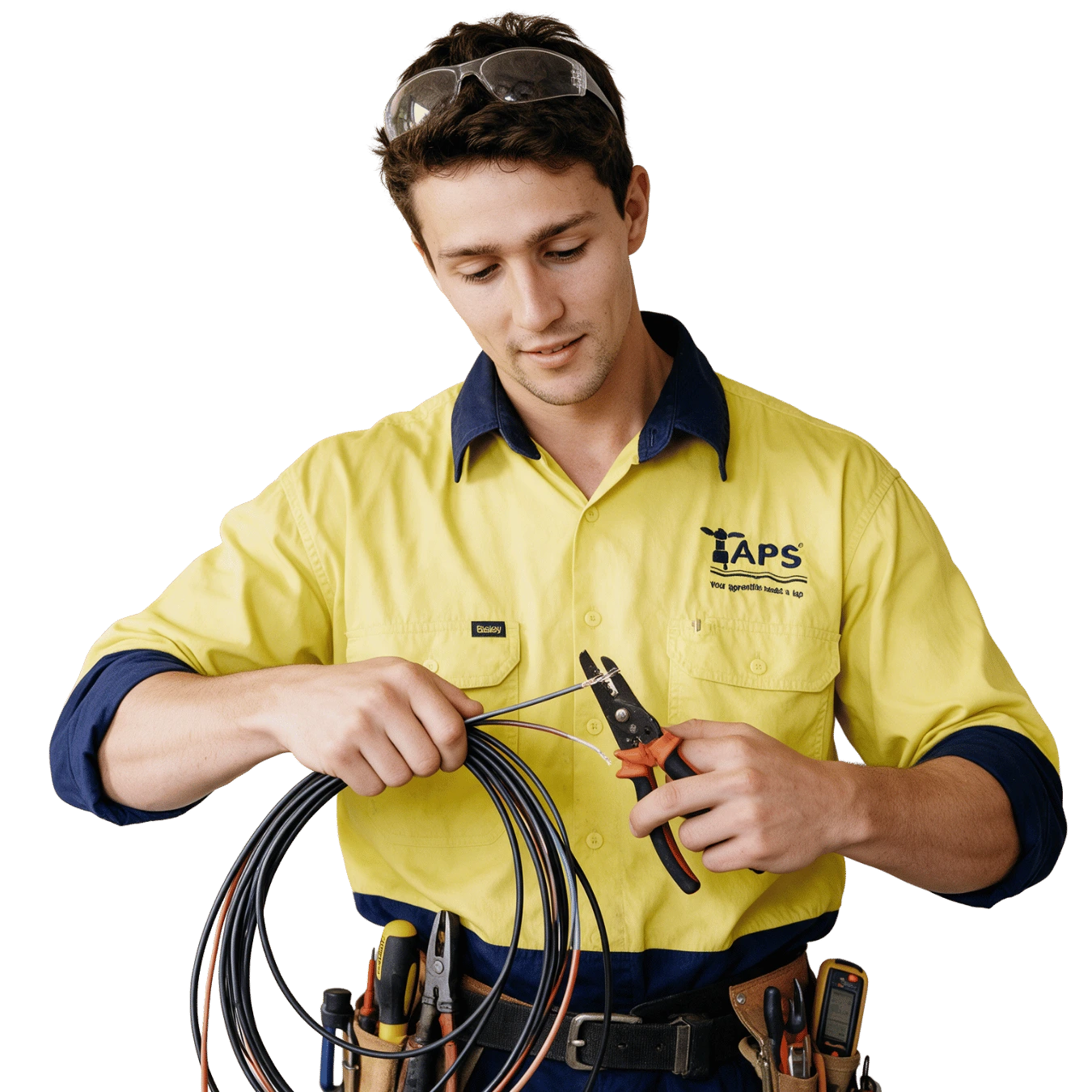
What does an Electrician do?
Electricians work on new builds, renovations, maintenance and fault-finding across homes, businesses and industrial sites.
Install wiring, power points, lighting and switchboards
Test, find faults and repair electrical systems
Read and interpret electrical plans and diagrams
Work to the Australian wiring rules and safety standards
Install and maintain solar, battery and EV charging systems, with extra training where required
On the tools
Where you could be working
Electrical work splits into three broad areas, and your host employer shapes which one you learn in.
Domestic
Homes and renovations: switchboards, appliances and existing wiring. A lot of the work happens in roof spaces and ceiling cavities, often with the family still living there.
Typical Sites
Homes, renovations, roof spaces, switchboards, ceiling cavities, existing wiring
Commercial
Commercial sites and construction projects.
Switch rooms, cable trays, plant rooms and ceiling spaces, sometimes in buildings still occupied and trading around you.
Typical Sites
Commercial sites, construction projects, switch rooms, ceiling spaces, cable trays, plant rooms
Industrial
Plants and production lines: control panels, motors, conveyors and automation systems. Plenty of fault-finding, plus shutdown work when machinery comes offline.
Typical Sites
Industrial plants, machinery, production lines, maintenance shutdowns, control panels
Not sure which suits you? Tell us in your application and we’ll talk it through at your interview.
Your qualification
Qualification
Certificate III in Electrotechnology Electrician (UEE30820)
DURATION
Usually around four years full-time
TRAINING
On the job, plus trade school blocks
TRADE SCHOOL FEES
Paid for by TAPS
PPE
Provided by TAPS
Near the end of your apprenticeship you’ll complete a final practical licensing assessment, often called the Capstone. Depending on your host employer, you may also be eligible for up to $10K through the Key Apprenticeship Program. Qualification details: CPC32420 on training.gov.au
Pathway slider
Drag through your apprenticeship.
Year 1 - indicative weekly wage
$540
Where you start on day one
Finding your feet
What you'll be learning
Electrical safety, hand tools, cable types and basic circuits.
Level of responsibility
Observing and assisting, never working live.
Indicative figures only. Wages vary by award, age and prior qualifications.
Your apprenticeship, year by year
Year 1
Learn the basics
Electrical safety, tools and basic circuits. You'll assist on installs and start trade school.Year 2
Build your skills
Take on more wiring, installation and testing work under supervision.Year 3
Step up
Work more independently, including fault-finding and more complex installations.Year 4
Finish strong
Complete your final training and the Capstone assessment, and earn your qualification.Registration and licensing in South Australia
In South Australia, all plumbing, gas fitting and electrical workers - including apprentices - need a photographic registration card from Consumer and Business Services (CBS). Once your training contract is approved, CBS will contact you by email or SMS to upload a photo and ID, then post your card out. There’s no fee.
Once you’ve completed your apprenticeship, you can upgrade to a full electrical worker registration.
Read more on SA.GOV.AU
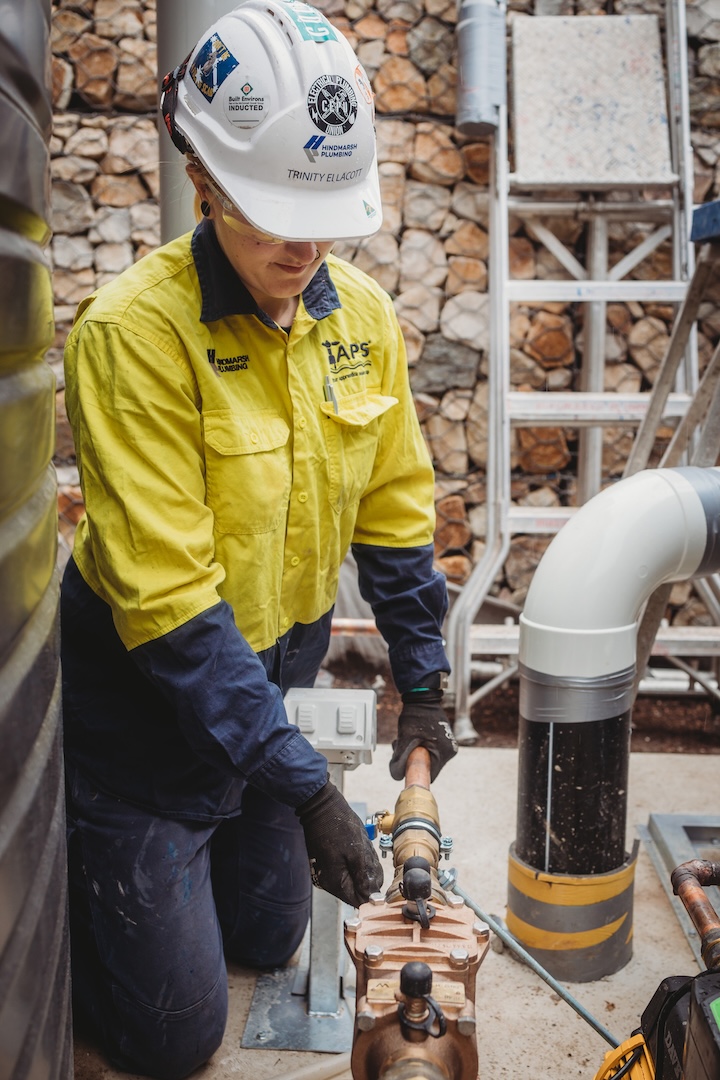
Is electrical right for you?
You enjoy problem-solving and working things out logically
You’re comfortable with maths - you’ll use it every day
You’re careful, patient and safety-focused
You’re interested in technology, solar and renewables
You have good colour vision - electrical wiring is colour-coded